When to aerate and overseed a lawn in Lexington, KY
Fall beats spring for tall fescue here. Here is how we pick a window, what soil temperature has to do with it, and the mistakes we see after the first warm week in March.
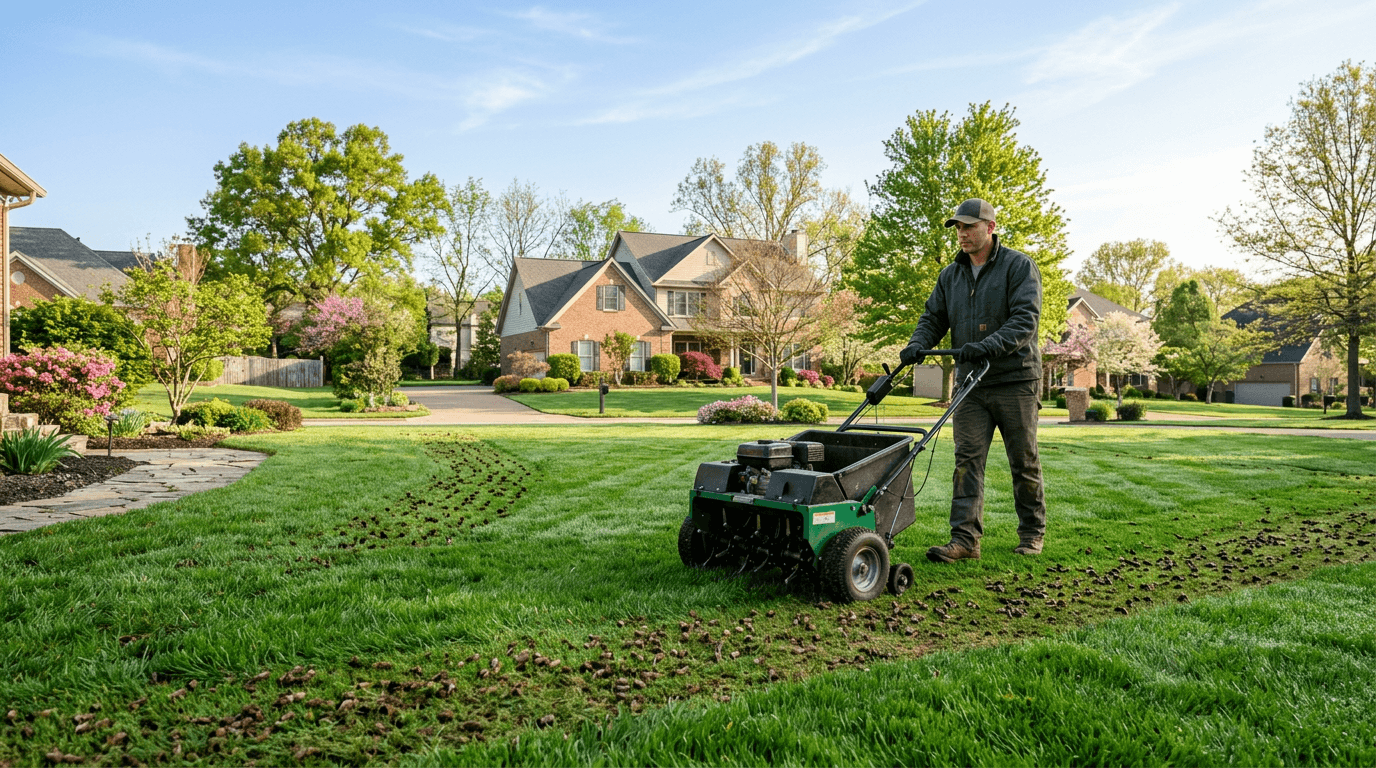
If you walk Fayette County neighborhoods in late February, you will hear aerators running. Sometimes that is fine. Often it is a few weeks early, and the holes close before seed gets a chance to settle in.
We run most of our aeration and overseeding in early to mid September through mid October. That window lines up with warm soil, cooling air, and enough calendar time for new grass to root before the first hard freeze. Lexington sits in the transition zone. Cool-season turf likes fall establishment more than a rushed spring job.
Soil temperature beats the calendar
Grass seed germinates when the top inch or two of soil hangs roughly between 50 and 65 degrees Fahrenheit for several days. Air temperature on your phone is a rough guide only. Shaded backyards in Chevy Chase warm slower than open front yards in Georgetown. A week of false spring does not reset clay that is still cold six inches down.
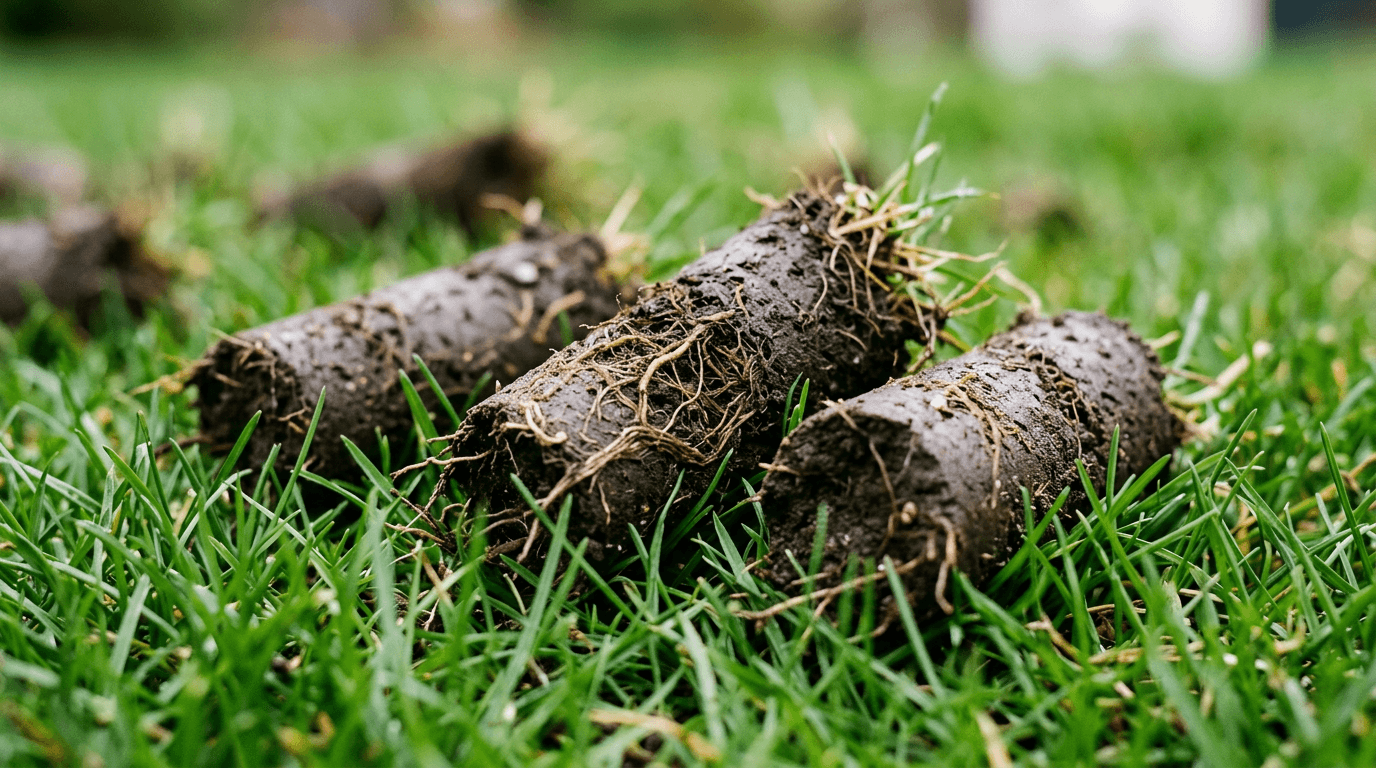
If you aerate while soil is cold, plugs are muddy and smear instead of pulling clean cores. Overseeding into that mess wastes money. Wait until nights stay above fifty more often than not.
Why we still do some spring seeding, but do not lean on it
Spring overseeding can work if you commit to watering through June and you accept that some seedlings will not survive summer heat. Kentucky bluegrass and perennial ryegrass can establish in April. Tall fescue, which most of our residential lawns lean on, is pickier about spring competition from crabgrass and from pre-emergent schedules.
If your lawn care company already applied a crabgrass barrier, you cannot throw seed on top and expect both to work. Someone has to choose. We spell that out before we touch a spreader.
What a good fall pass looks like
We mow a touch lower than usual, mark irrigation heads, then aerate so cores actually lift out of compacted clay. After that we drag or blow plugs depending on the neighborhood and how much mud the kids will track in.
Seed goes down with a starter fertilizer that matches your soil test if we have one. If we do not, we use a conservative analysis blend rather than guessing. Water means light frequent cycles for two weeks, then deeper and less often once you see uniform germination.
The March rush
Lexington gets a warm spell almost every March. People see green tips and assume overseeding time returned. For established tall fescue, that warm spell is when we focus on soil test, pre-emergent timing, and mechanical damage repair, not on blanketing new seed across the whole yard unless we are patching thin spots with a plan.
If you are not sure, walk the lawn
Thin spots along tree lines, dog paths, and last year's construction tracks tell you where seed belongs. Uniform yellowing is usually not a seed problem. It is fertility, drainage, or disease. Throwing seed at fungus does not fix the underlying issue.
We would rather tell you to wait two weeks than bill you for a job that will wash out in the first gully washer. If you want a second opinion on timing, contact us with a short description of sun, irrigation, and what you did last year. That is enough for a straight answer most of the time.
Need help with your lawn or landscape in Central Kentucky? Lexington Landscaping Co. serves Lexington, Nicholasville, Georgetown, Versailles, and Winchester.
Get a Free Estimate →