French drains vs catch basins for standing water in Kentucky clay
Clay holds water. French drains move it sideways through gravel. Catch basins gulp surface puddle fast. Here is how we pick between them on real yards in Fayette and Jessamine counties.
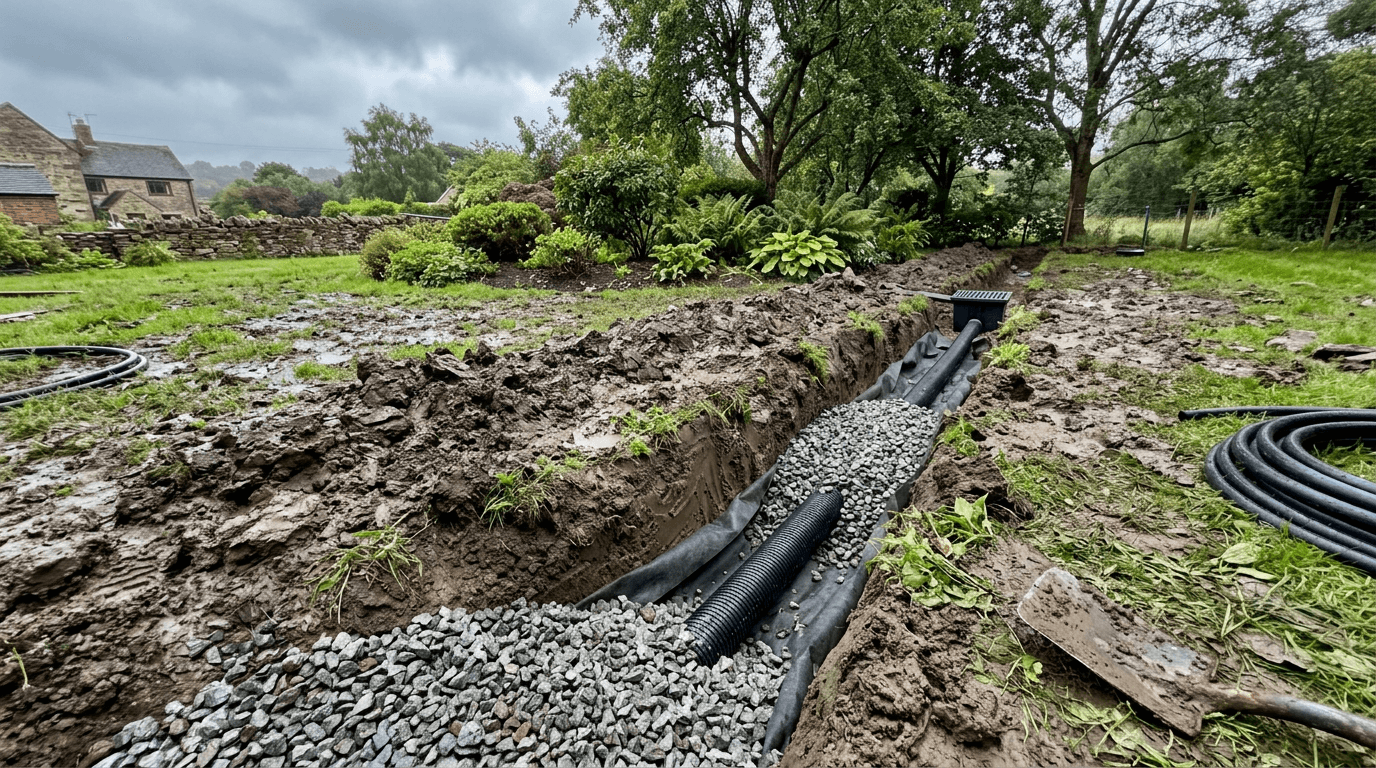
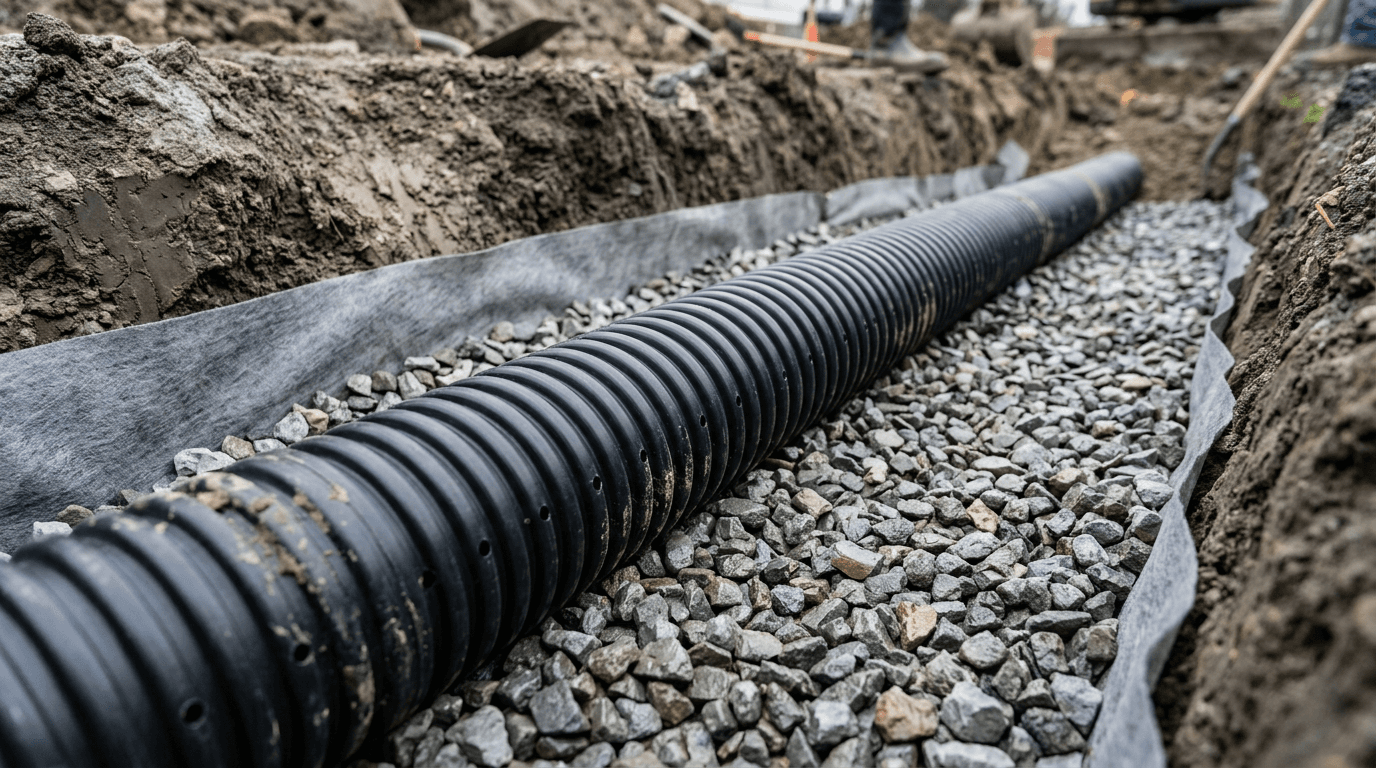
A French drain is a trench, perforated pipe, and clean stone that gives groundwater a path away from where you do not want it. A catch basin is a box with a grate that drops surface flow straight to pipe. They solve different headaches. On Lexington lots with tight clay and flat backyard grades, we often use both.
When a catch basin is the right first move
If water pools on the patio or along the garage slab after a twenty-minute thunderstorm, you have a surface collection problem. A basin buys you time. It pulls water off hardscape before it slips under the sill or stains the foundation.
Basins need a solid outlet. If the only place left to daylight is uphill, the fix is not a bigger grate. You need a pump or a different route. We map that before we cut concrete.
When clay points you toward a French drain
Clay does not absorb rain fast. Water sits in the lawn until it either evaporates or finds a crack. If your neighbor's yard is always dry and yours is always spongy, you probably have a perched water situation or a buried spring line nobody wrote down.
French drains work when there is somewhere lower to send water: a street storm tie-in where code allows, a dry creek bed, a wooded back corner, or a second basin at the low end of the trench. The trench has to maintain fall the whole way. On paper that sounds obvious. In the field, tree roots and old wall footings get in the way.
Why we do not promise "dry in a day"
Grading still matters. A drain that starts in a bowl will always refill. Sometimes the honest fix is six inches of regrade along the foundation plus a short run of drain, not two hundred feet of pipe because a diagram looked impressive.
We have walked away from jobs where the only outlet would flood a downhill neighbor. That is a liability issue and a bad way to sleep at night.
Cost drivers you can actually see
Depth, linear feet, tree protection, paver removal and reset, and whether we are cutting a driveway all move price more than the color of the gravel. Fabric under stone is standard for us so silt does not clog the pipe in year three.
If you want numbers for your situation, drainage page lists what we typically bundle. A site visit still beats a guess from a satellite photo.
Maintenance people forget
Outlets need to stay clear. Mulch, leaves, and kid toys block grates. If you have a pop-up emitter in the lawn, mark it before the first freeze so the plow guy does not shear it off.
We write simple as-built notes for homeowners: start elevation, end elevation, cleanout locations. If your landscaper will not put that on paper, ask why not.
Need help with your lawn or landscape in Central Kentucky? Lexington Landscaping Co. serves Lexington, Nicholasville, Georgetown, Versailles, and Winchester.
Get a Free Estimate →